
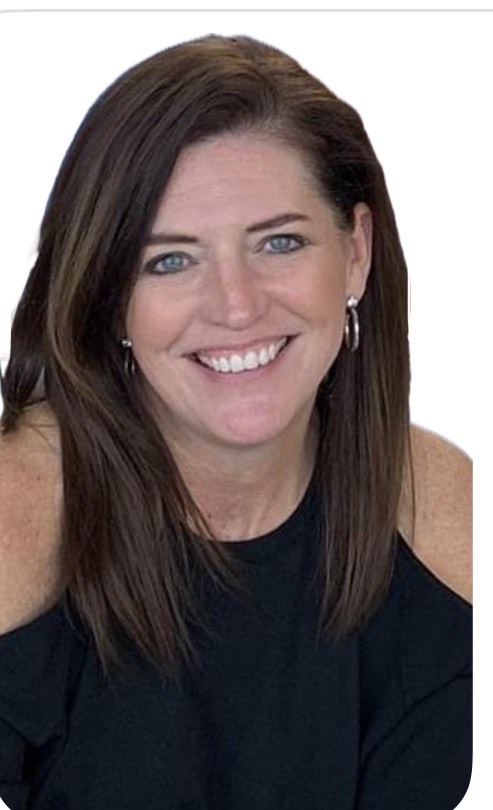
FTD Chief Financial Officer (Ret), Carrie Wolfe
Annette Walker (Girl Money Talks )
Can you describe your job, or your most recent job, and what you did or do in the simplest terms?
Carrie Wolfe (Former CFO of FTD)
My last job before retirement was as CFO for FTD. So it was the floral company. We were a direct-to-consumer company, and then we had a B2B interface on the back end, so that people, you know. For instance, if you were in Illinois and someone passed away in Colorado. You didn’t see a florist in Colorado; you could call your local florist, place an order, and then it would be fulfilled through the FTD system. So, I was there; I was CFO for about a decade, my last stint. So I started, so I’m a CPA. I went, and I have an accounting degree. My husband and I were in the last class before they required a master’s degree. We have a four-year degree, followed by a five-year master’s program the next year. Accounting is excellent, you know, depending on whether you like it. I loved it. My husband, Mike, did not. So he started, and then as quickly as he could, got into operations.
Whether you’re considering starting a business and aren’t sure what you want to do, accounting is a great option. Not if you want to go into sales, but certainly if you want to explore other facets of operations, having an accounting background and actually understanding a company’s finances is crucial.
I will tell you, no offense, I am not a feminist. I am, which may sound unusual, but I’ve had a fantastic career. I worked harder than everyone, male or female, around me, and that’s how I got ahead. It was offensive if somebody gave me an opportunity because I was a female. That’s just not who I am. That’s not how I was raised. That’s not how I raised my girls. I don’t love it when women play the female card. And I would say a lot of businessmen don’t like it when women play the female card. So, my advice to you is particularly in this day and age. Where you have a lot of people who want to work from home and have this work-life balance and all this stuff, if you want to get ahead, it’s important to you.
Having a fantastic career is about working harder than the person next to you, regardless of who that person is. You know, race, gender, preference, whatever it might be, right?
I joined FTD on the FTD.com side when I visited the site. So, back then, it’s likely that it happened before you were born. There was a phenomenon they called the .com bubble. There was a bunch of .coms that were all taking off. Everybody was leaving. Everybody was going public at crazy valuations. FTD.com was going to go public right after the bubble burst. And literally, there was a book, we had a roadshow, and the whole thing fell apart. Because the bubble burst, and all valuations for .coms plummeted. We remained a private company for a period. We then conducted a reverse merger with our parent company.
The CEO at FTD.com ended up being a massive influence in my career, providing me with numerous opportunities. I learned a fantastic amount. He was initially from private equity. So he was deal-focused. And, I would, you know, having somebody who you work for, who you respect, who mentors you, who carries you along and lets you have different experiences and grow is so key. At one point, I ran the call center. I ran HR. I had legal under me. I mean. It was a small company, and he had a small company mentality: if somebody’s good, we’ll just let them do other things, right? And so it was, you know, it’s all about how much you want to work. I worked a ton. As a result, I was able to retire very early, which was great. Everyone’s got to choose their own path, and it’s just different, you know, it’s what you want in your 20s and 30s, and how hard you’re willing to work for it. Yeah, that was amazing.
Annette Walker (Girl Money Talks )
You answered, just as I was going to ask a question about mentors and advice, and you got it all. I was also going to ask about your previous job. Did your job have a lot of, like, structure day to day? Or was it flexible? Because I’m the type of person who likes to have a really, like, set routine.
Carrie Wolfe (Former CFO of FTD)
No, so it’s accounting; it depends on what you specialize in within accounting, right? So I started as an auditor at Pricewaterhouse, when it was still Pricewaterhouse, which probably still totally dates me, because now it’s PricewaterhouseCoopers. However, after that, I was at Whitman, which later became Pepsi, and then General Bottlers, where I worked on financial reporting. So financial reporting is very structured because every month, I mean, you’re closing the books, you’re doing the reports. It’s very, I don’t want to say it’s repetitive, but there’s a lot, you know, obviously different things happen in the business that you have to account for and figure out. But there is a very repetitive nature to accounting. And then certainly as CFO, you have, I mean, there are people underneath you that are doing that, but you have that element, and then you have the random stuff happening in the business that you have to figure out how to deal with. So it was a good, it’s a good, it was a good balance of, you know, not complete chaos, but just enough chaos to keep it interesting.
Annette Walker (Girl Money Talks )
Is there anything that you specifically studied in college that you would say contributed to your success? Or, on the flip side, was there anything that you regret not studying?
Carrie Wolfe (Former CFO of FTD)
No, not really. So, when you pursue a CPA, it’s a relatively structured program. You get a few electives here and there, but to reach the point where you have enough hours in each category, there isn’t much flexibility. You do take tax, you take law, you take, you know, so you have a wide breadth of information to be able to sit for the CPA. So, no. In our family, since I attended the University of Illinois, my husband attended the University of Notre Dame. Notre Dame’s education was, as we’ve discussed, especially since we’ve had kids who have gone through school. I’m the math person in the house, and he’s the English person in the house. Notre Dame did a much better job than the University of Illinois in promoting a greater emphasis on English and writing, and so on. I have a stronger accounting background, as the University of Illinois emphasized accounting in its program.
If you’re thinking about going into accounting, unless you’re willing to commit to five years and become a CPA, don’t do it. An accounting degree without a CPA. It’s a waste. Like, you know, suck it up, go the extra year, work a little bit harder, study a little bit longer, and take the CPA. It gives you a completely different level of jobs that you can reach. And maybe not your first three or four years out, but certainly within 10 years. If you don’t have a CPA and you have an accounting degree, you’re stuck in that kind of accounting manager job versus being able to, you know, go a little bit higher. Yeah.
Annette Walker (Girl Money Talks )
That’s really insightful because I’m applying to the University of Illinois and Notre Dame.
Carrie Wolfe (Former CFO of FTD)
And again, this was a lot of years ago, so maybe the programs have changed, but, you know, 35 years ago, that’s what it looked like.
Annette Walker (Girl Money Talks )
Yeah. My only other questions were, like, talking about, like, the… More stuff about, like, I mean, you talked about how you had a mentor, and like, that’s who you turned to for advice. And then I had another question: How do you envision new opportunities emerging for women in your field? But you answered that already, like, just what?
Carrie Wolfe (Former CFO of FTD)
Our daughter is also a CPA, our oldest one. Yeah, we’re like a family of freaky accounts. My youngest is pursuing a master’s degree to become a family therapist, as she attended a one-year business school program at Kelly and realized it wasn’t the right fit for her. So, accounting is something that, particularly if you have a CPA, is never going away. Businesses are all. So from that standpoint, like, there is, I would say, some job security, in more than other fields or other degrees, I think you have some job security to some degree. Indeed, especially if you’re… It’s, you know, that helps. It probably helps to some degree, but Liz, our oldest one, is perhaps not. I think she sees the effects of women less by, you know, like that, you know, she’s held back or not held back.
It’s so much easier and so much less of a thing now. When I started at Pricewaterhouse, women weren’t allowed to wear pantsuits. We were only allowed to wear a skirted suit. Like, our suits had to have a skirt. Yeah. I mean, yikes. Yikes, right? Right. So, we were like the last of the big six; now it’s the big four, but we were the last of the big six to allow women to wear. So it seems ludicrous now; if you’re saying it, you’re like, ‘ What? ‘ Right? But, you know, and at the time when I started Pricewaterhouse, we, you know, there were no female partners at all in the Chicago office. New York had some, but Chicago didn’t have any. We had a senior female manager. And, you know, for me, it didn’t matter.
I had interned with them, so I knew I would be working with one of their larger clients, which was Stone Container at the time. And then I ended up securing another major client, Dean Foods.
So, when it comes to working harder and getting ahead, I had the most billable hours in my first two years out of any class. So, you start, and accountants all begin in a class. And then you graduate to your next level together, and so on. And somewhat because of that, and just working hard, I ended up getting promoted early. Two people in our class were promoted early. So I looked at it and it wasn’t because I was female. It wasn’t just because I was putting in more hours and working harder and smarter than my counterparts. And I landed better jobs with really high-profile partners who would support an early promotion. I can’t stress enough how great it is. It is imperative to work harder than the person next to you.
It’s essential to ensure that your boss and your boss’s boss are people you respect and who know you. There are many people, both male and female, who fail to treat employees well and disrespect those who put in extra effort or make exceptional contributions. Finding those people is enormous, as it’s something you should look for in your career. Make sure you’re working for people you respect, because if you don’t, particularly in accounting, I think there are numerous ethical issues and other concerns that you just don’t want to get entangled with.
Annette Walker (Girl Money Talks )
Okay, I think that’s all I had to ask. I really appreciate it again. This will be most helpful to our readers and, of course, to me.
Carrie Wolfe (Former CFO of FTD)
Okay, thank you. Have a great week.
 Girl Money Talks
Leave a comment